
Social Media for Doctors: Content Ideas to Build Patient Trust
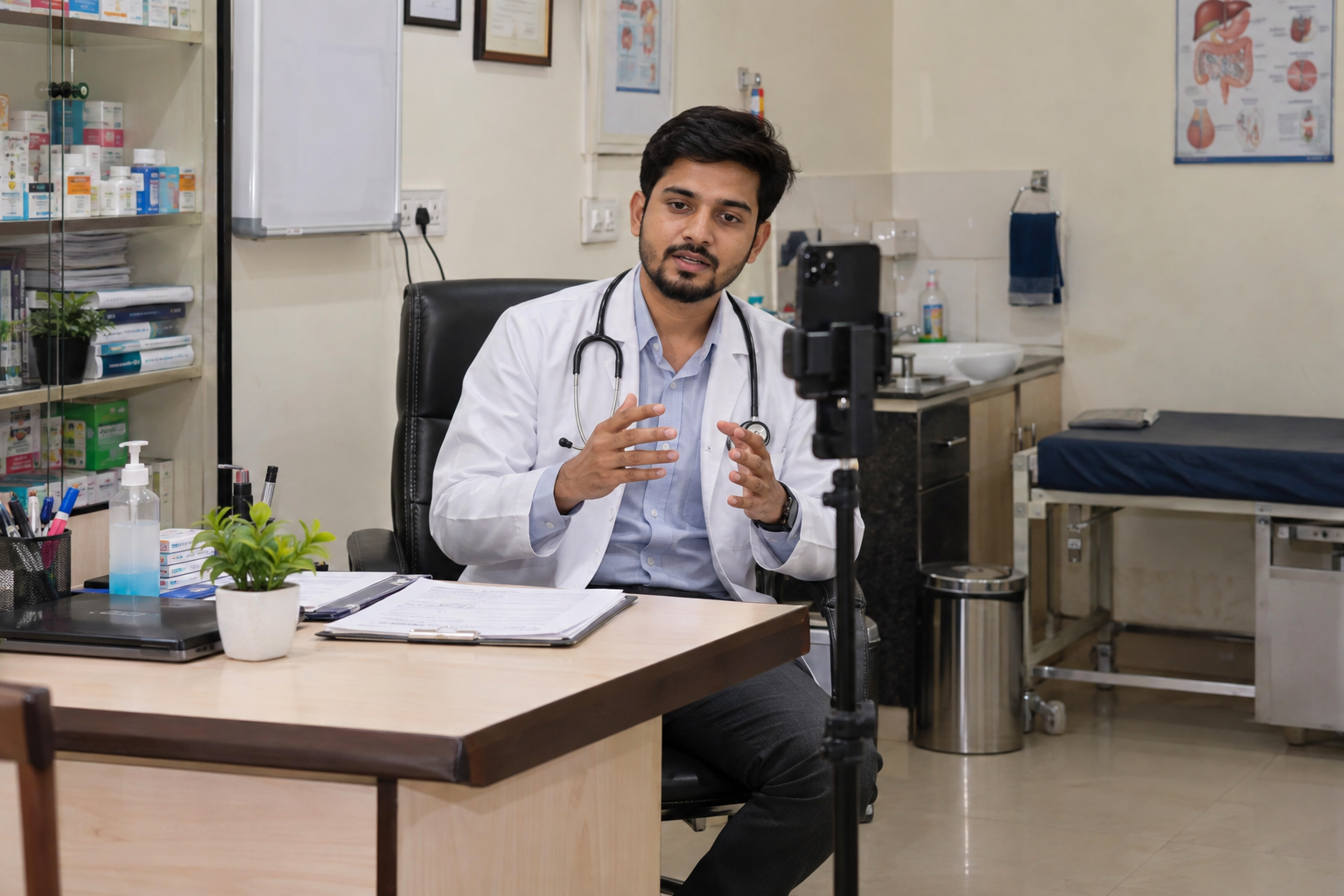
social Media for Doctors :The Comprehensive Guide to content Ideas That Ideas That Build Patient Trust
Summarize this blog post with: ChatGPT | Perplexity | Claude | Grok
First, most doctors already know that patients check Google, Instagram, Facebook, YouTube, reviews, and other online sources before choosing a healthcare provider. The gap is that posting clinic graphics is not the same as creating medical content that builds patient confidence. In this guide, you will learn what doctors should post, which platforms make sense, and how to create a practical social media strategy focused on patient trust rather than vanity metrics.
Key Takeaways
- Social media for doctors is the professional use of social platforms to educate patients, demonstrate expertise, strengthen online reputation, and remain visible before an appointment.
- Medical social media posts should prioritize patient education, frequently asked questions, preventive guidance, treatment explanations, and transparent clinic information.
- Social media platforms for doctors should be selected according to patient demographics, communication goals, and available content formats rather than popularity alone.
- LinkedIn for doctors is especially useful for professional networking, medical leadership, institutional communication, research commentary, and B2B relationships.
- Healthcare online reputation management should connect social media, Google reviews, Google Business Profile, and your medical website into one consistent online identity.
- Consistent content pillars usually create a more sustainable healthcare social media strategy than random daily posting.
- Healthcare social media agencies can be useful when a practice lacks the time, team, approval process, or creative resources required for consistent execution.
What Is Social Media for Doctors and How Does It Work?
Social media for doctors is the professional use of platforms such as Instagram, Facebook, LinkedIn, and YouTube to educate patients, communicate expertise, strengthen reputation, and keep a medical practice visible online.
First, effective healthcare content is different from aggressive advertising. A doctor does not need every post to say “Book an appointment today.” Instead, a dermatologist could explain when persistent acne needs professional evaluation, while a dentist could demonstrate the correct brushing technique.
Moreover, this approach supports a wider digital marketing for doctors strategy because a patient may discover a doctor through Instagram, verify reviews on Google, visit the clinic website, and only then make an appointment.
“digital marketing for doctors” → complete digital marketing for doctors and clinics guide
Quote-ready: Social media works best for doctors when it reduces patient uncertainty before the first appointment.
Why Is Social Media Important for Doctors and Medical Practices?
Social media is important for doctors because patients increasingly encounter health information online, while professional educational content can help practices build familiarity and communicate credible information.
First, Pew Research Center reported in 2026 that 36% of U.S. adults said they at least sometimes get health information from social media. The same research found that 73% obtain health information from at least three of the information sources studied. — Source: Pew Research Center, 2026.
Second, a 2025 U.S. study of 636 orthopaedic patients found that 57% had used social media for healthcare-related information during the previous year, while 45% had viewed a physician or surgeon’s social media account. — Source: Arthroscopy, Sports Medicine, and Rehabilitation, 2025.
Moreover, the same study found that 29% said social media was likely or very likely to influence their physician preference. This does not mean social media determines every patient’s choice, but it shows that professional online communication can form part of the decision journey for a meaningful share of patients in that study. — Source: Arthroscopy, Sports Medicine, and Rehabilitation, 2025.
At the same time, healthcare misinformation makes credible communication more important. A 2025 study of 3,805 U.S. adults found an association between perceiving substantial health misinformation on social media and lower trust in the healthcare system. — Source: HINTS 6 analysis published in 2025.
[ “healthcare online reputation management” → doctor and clinic reputation-management guide]
Quote-ready: Medical social media should compete for patient trust, not merely compete for patient attention.
What Should Doctors Post on Social Media to Build Patient Trust?
Doctors should post useful, understandable, accurate content that answers real patient questions and makes their expertise, clinic processes, and approach to care easier to understand.
1. Answer common patient questions
First, convert genuine consultation questions into short posts.
For example, a cardiologist could create “When should high blood pressure become a concern?” A dentist might answer “Why do gums bleed while brushing?”
This format works because the content begins with a problem patients already recognize.
2. Create myth-vs-fact medical social media posts
Second, use short myth-versus-fact posts to clarify common misconceptions without turning the content into personalized diagnosis.
For example:
Myth: Antibiotics work for every infection.
Fact: Antibiotics target bacterial infections and are not appropriate for every illness.
Moreover, keep explanations within the doctor’s actual specialty and avoid oversimplifying conditions that require individual assessment.
3. Publish doctor-explains videos
Third, doctor-explains videos can turn complex medical language into practical patient education.
For example, an orthopaedic doctor could record a 45-second video explaining when knee pain warrants a clinical evaluation.
4. Explain treatment and consultation processes
Next, show patients what normally happens during a consultation, diagnostic assessment, follow-up, or procedure.
For example, an IVF clinic could explain what patients should expect during the first fertility consultation without promising outcomes.
Treatment-process content reduces uncertainty by explaining what a patient can expect before arriving at the clinic.
5. Share preventive-care education
Moreover, preventive content provides value even before the viewer needs treatment.
Useful topics can include:
- oral-hygiene habits;
- diabetes screening awareness;
- eye-health precautions;
- vaccination education;
- pregnancy-care questions;
- posture and joint-health guidance.
6. Introduce the doctor and medical team
Next, introduce the people patients will actually meet.
For example, a post might briefly explain a doctor’s specialty, qualifications, clinical interests, and consultation philosophy. Another can introduce nurses, physiotherapists, technicians, or front-desk staff where appropriate.
7. Show a professional clinic walkthrough
In addition, a clinic walkthrough can show the reception area, consultation room, diagnostic equipment, accessibility information, parking guidance, or patient flow.
For example, a clinic in Patna could make a Reel titled “What to expect when you visit our clinic for the first time.”
8. Turn FAQs into a recurring content series
Similarly, create a weekly series such as “Doctor Answers Friday.”
For example:
- Is fever always dangerous?
- Should I fast before this test?
- How often should children get dental check-ups?
- When should back pain be evaluated?
9. Use reviews and testimonials responsibly
Next, genuine patient reviews can support healthcare online reputation management, but practices should use appropriate permission and avoid revealing sensitive patient information.
BrightLocal’s 2025 Local Consumer Review Survey included 1,026 U.S. adults and found that consumers increasingly seek detailed, factual information across reviews when evaluating local businesses. — Source: BrightLocal, 2025.
[ “how to rank your clinic on Google Maps” → clinic Google Maps and Google Business Profile SEO guide]
10. Explain medical technology instead of merely displaying it
Finally, if a clinic has specialized equipment, explain what it does and when it may be used.
For example, instead of posting “We have advanced technology,” a dental clinic can show an intraoral scanner and explain how it helps capture digital impressions.
Quote-ready: Patients do not need more promotional healthcare posts; they need clearer healthcare information.
Which Social Media Platform Is Best for Doctors?
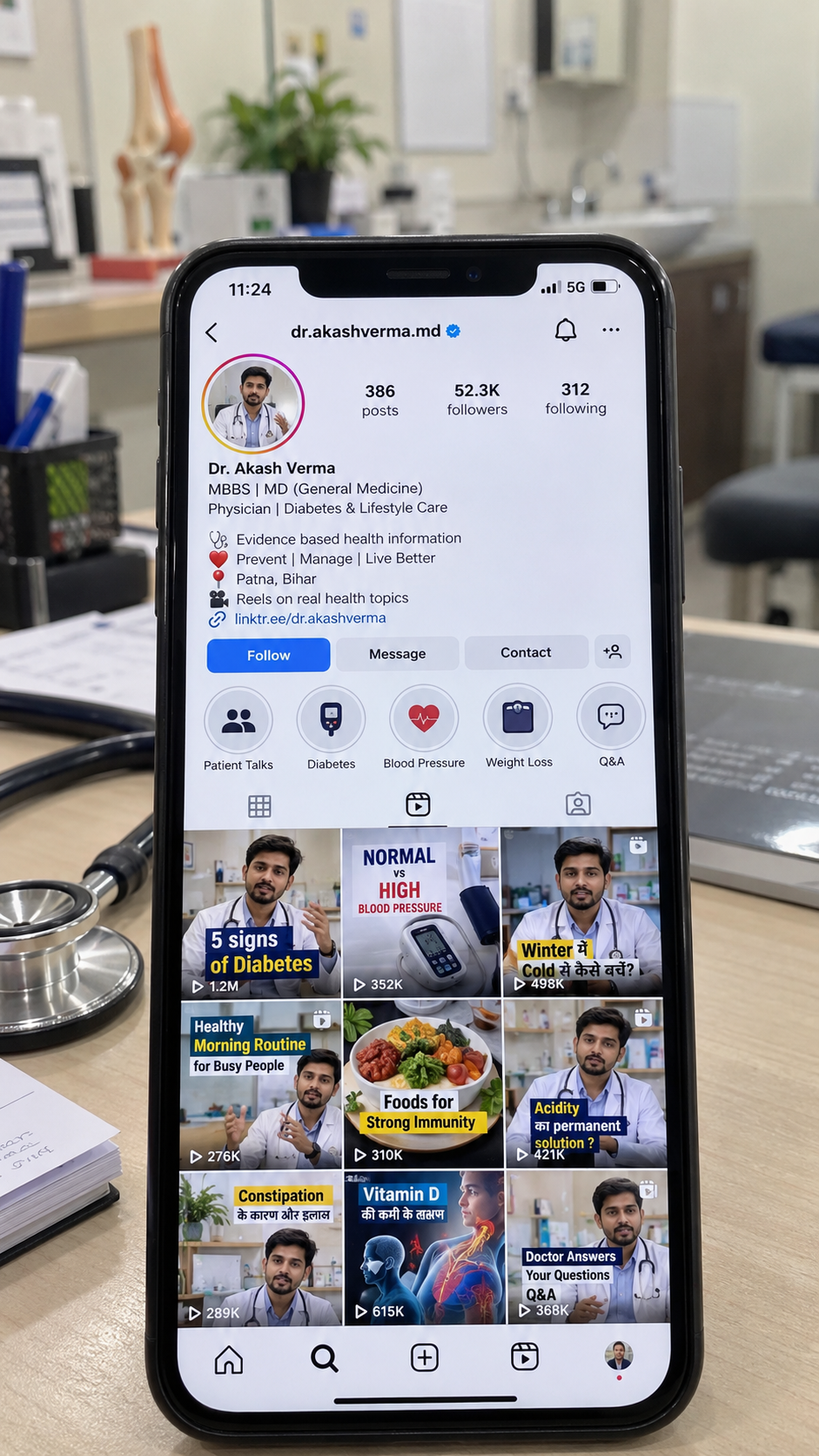
The best social media platform for doctors depends on the audience, medical specialty, content format, and business objective, so no single platform is universally best.
Platform | Best suited for | Useful content |
Patient education and visual communication | Reels, carousels, FAQs, clinic content | |
Local and broader-age audiences | Videos, educational posts, updates | |
YouTube | Detailed patient education | Long-form explainers, FAQs, interviews |
Professional credibility and B2B networking | Insights, research, leadership posts | |
Google Business Profile | Local discovery and trust | Updates, photos, reviews, clinic information |
How can doctors use Instagram?
First, Instagram works particularly well when a medical topic can be explained visually and briefly.
For example, a dermatologist can build recurring series around skincare myths, common conditions, seasonal guidance, and consultation FAQs.
How should doctors use LinkedIn?
Second, LinkedIn for doctors works differently because the audience often includes doctors, hospitals, administrators, healthcare companies, researchers, and other professionals.
Useful LinkedIn topics include:
- clinical observations without patient-identifying details;
- healthcare leadership insights;
- conference participation;
- research commentary;
- professional achievements;
- medical technology developments;
- hospital and institutional updates.
Quote-ready: LinkedIn for doctors is primarily a professional credibility channel rather than a patient-promotion channel.
How Often Should Doctors Post on Social Media?
Doctors should post at a frequency their practice can maintain consistently without sacrificing medical accuracy, content quality, or professional review.
First, a practical starting schedule for many clinics is three quality posts per week rather than trying to publish something every day.
For example:
Day | Content pillar | Format |
Monday | Patient education | Carousel |
Wednesday | Doctor answers a question | Reel |
Friday | Clinic trust/process | Photo or short video |
Moreover, one longer doctor recording session can produce several shorter pieces. A 20-minute recording can be divided into multiple FAQ videos, short clips, quote graphics, and LinkedIn posts.
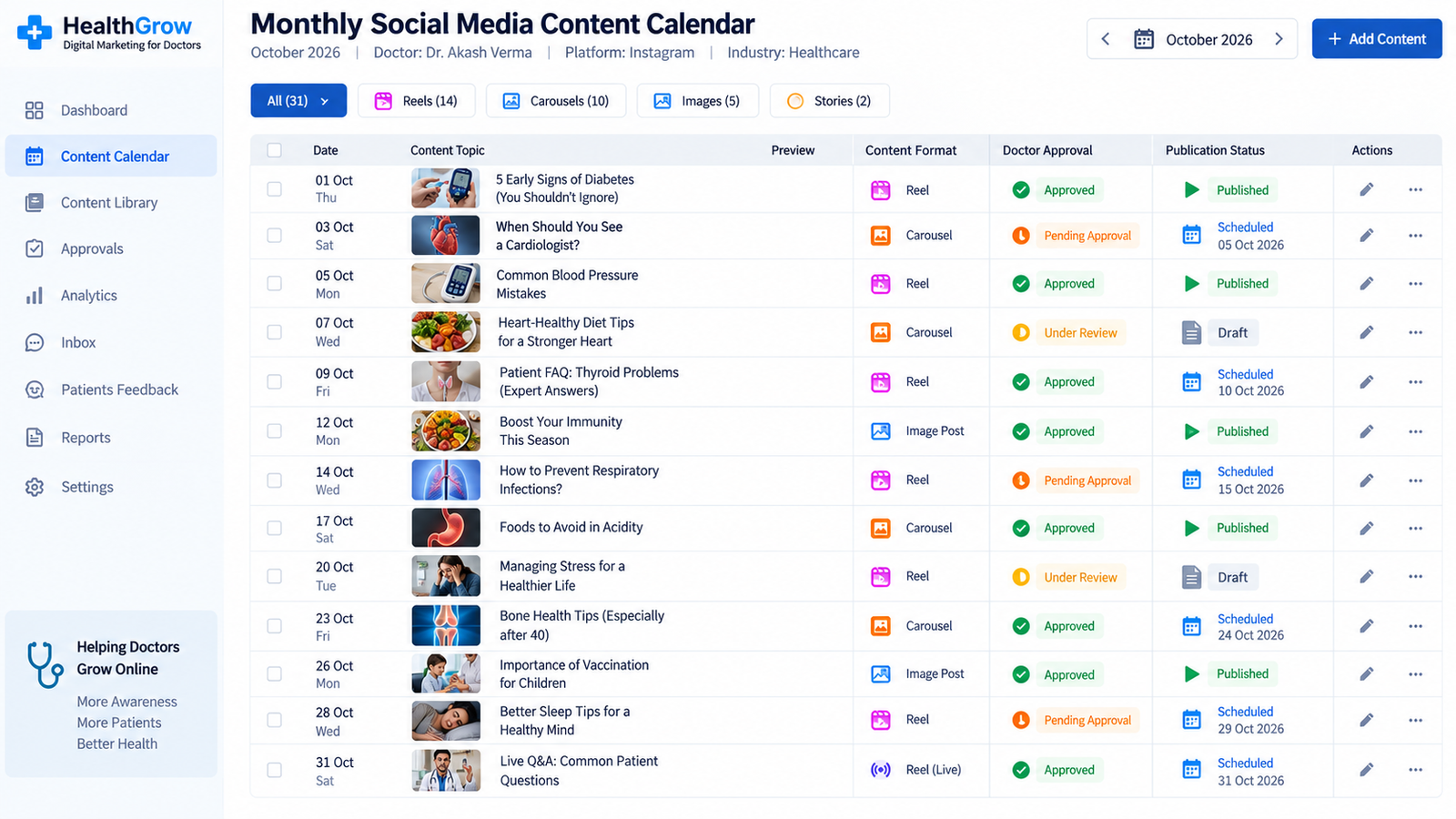
How Can Doctors Create a Monthly Social Media Content Calendar?
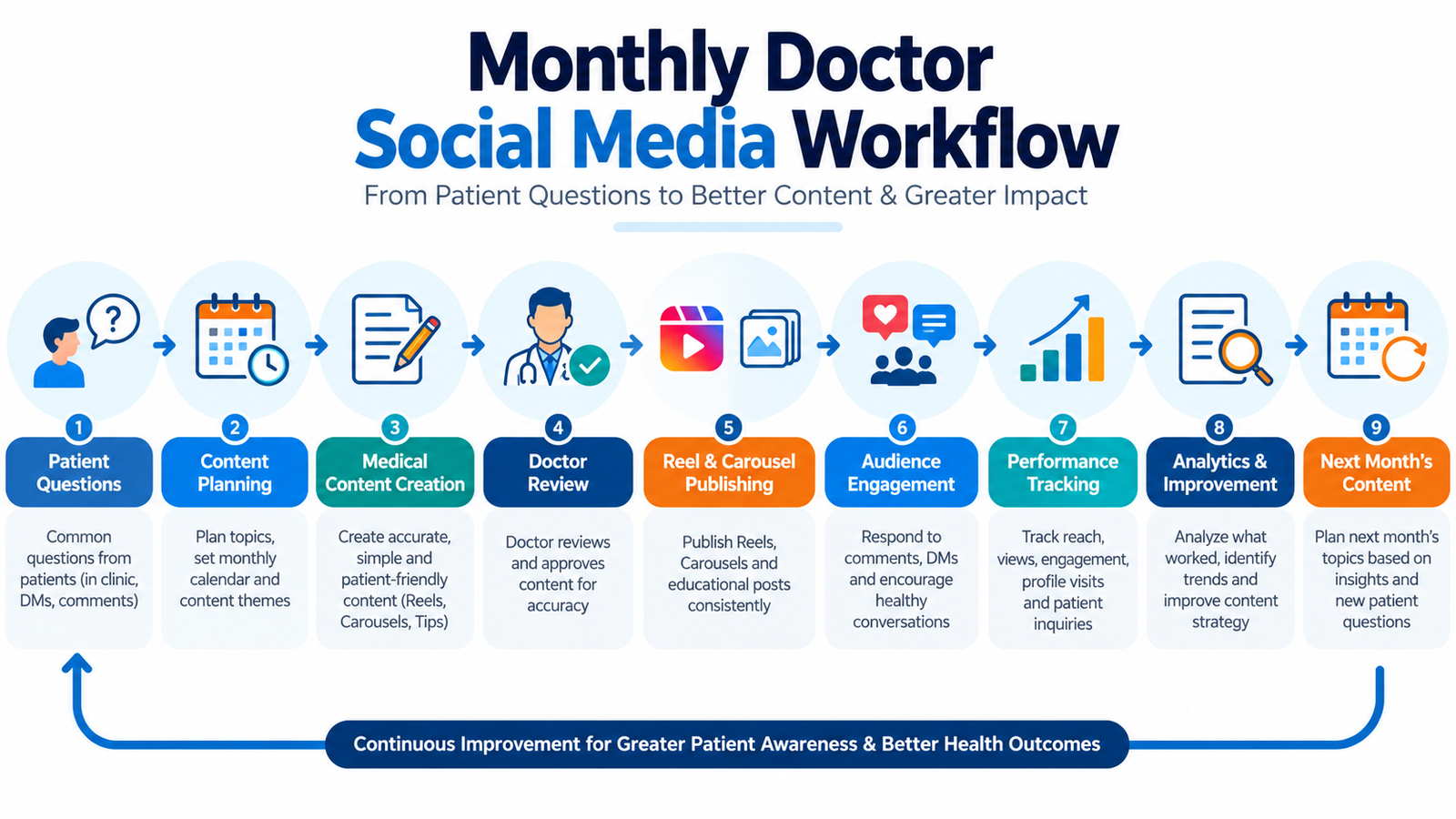
A monthly medical social media calendar organizes repeatable content pillars around real patient questions, educational topics, clinic information, and reputation-building content.
First, choose three to five pillars:
- Patient education
- Common questions
- Preventive care
- Doctor expertise
- Clinic trust and process
Second, collect questions patients repeatedly ask during appointments, calls, WhatsApp conversations, and reception enquiries.
Third, batch content whenever possible. For example, recording six FAQ videos in one session is usually easier than arranging separate recording sessions throughout the month.
Finally, introduce a simple approval workflow:
Topic → Medical review → Script → Recording/design → Final approval → Publishing → Performance review
“strategic healthcare marketing” → healthcare marketing strategy guide]
How Does Healthcare Online Reputation Management Support Social Media Marketing?
Healthcare online reputation management coordinates the information patients see across social media, reviews, Google Business Profile, websites, and other digital touchpoints.
First, patients should find consistent clinic information wherever they search. The doctor’s name, specialty, address, appointment details, clinic photographs, website, and other basic information should not conflict across platforms.
Moreover, online audiences do not automatically trust health information simply because it appears on social media. A 2025 study involving people with systemic lupus erythematosus found 98.2% reported trusting doctors, compared with 26.8% who reported trust in social networking services. This was a specific Japanese SLE population and should not be generalized to all patients, but it illustrates the continuing importance of physician credibility. — Source: TRUMP2-SLE Study, 2025.
Quote-ready: A doctor’s strongest digital trust signal is consistency between professional expertise, public information, reviews, and patient education.
What Social Media Mistakes Should Doctors Avoid?
Doctors should avoid social media practices that compromise patient privacy, medical accuracy, professional credibility, or realistic expectations about treatment.
First, avoid publishing patient-identifying details without appropriate authorization.
Second, avoid diagnosing individual users in public comments. A general educational response and an invitation to seek an appropriate clinical assessment is safer than giving a personalized diagnosis from limited information.
Third, avoid exaggerated guarantees such as “100% cure,” “guaranteed result,” or misleading before-and-after claims.
Moreover, avoid filling your feed with generic festival creatives, copied health quotes, stock photographs, or repetitive appointment promotions.
Finally, do not measure success only through followers. Meaningful metrics include profile visits, calls, website visits, appointment enquiries, saves, shares, watch time, review growth, and local-search visibility.
Based on my 10+ years of experience in digital marketing, I can tell you that social media marketing does not simply mean starting to publish content on social media and expecting immediate results.
Social media marketing is a game of patience.
The results depend on several factors, such as how many people are reaching your posts, whether users are engaging with your content, how your audience is responding, how many new people the platform is showing your content to, and how consistently you are publishing.
There are many other factors that influence social media performance, and building a strong presence takes time.
So, when you start social media marketing, do not expect results overnight. Give your strategy enough time to reach the right audience, understand what works, and build consistent engagement.
Good social media marketing is not about getting instant results; it is about building sustainable results over time.
How Can Social Media, Google Business Profile, SEO, and a Medical Website Work Together?
Social media, local SEO, Google Business Profile, reputation management, and medical website development work best as interconnected parts of one patient-discovery journey.
First, social media can create awareness.
Next, Google Business Profile can help a patient verify location, photographs, hours, and reviews.
Then, medical website development can provide detailed information about the doctor, services, treatments, facilities, FAQs, and appointment options.
Finally, SEO can help useful medical pages appear when potential patients actively search for relevant services.
For example:
Instagram Reel → Google search → Google reviews → doctor website → appointment enquiry
What Tools and Practical Applications Can Doctors Use for Social Media?
Doctors can manage social media using a simple combination of planning, design, analytics, video, and business-profile tools rather than complicated marketing software.
First, practical tools include:
- Google Sheets for content calendars;
- Canva or professional design software for graphics;
- Meta Business Suite for Facebook and Instagram publishing;
- YouTube Studio for video performance;
- Google Business Profile for local updates and reviews;
- Google Search Console for website search visibility;
- platform-native analytics for engagement and audience data.
Moreover, evaluate content according to the objective. Educational content may be judged by saves and watch time, while clinic-intent content may be judged by website clicks, calls, directions, and appointment enquiries.
Should Doctors Manage Social Media Themselves or Hire a Healthcare Social Media Agency?
Doctors can manage social media internally when they have enough time and support, while a healthcare social media agency can manage planning and execution when consistent internal resources are unavailable.
First, internal management works when the clinic has someone capable of maintaining a calendar, coordinating doctor approval, designing posts, editing videos, publishing content, managing reviews, and measuring performance.
However, a marketing agency for doctors can be useful when the practice needs these tasks coordinated across social media, SEO, reputation management, Google Business Profile, paid campaigns, and the website.
For doctors and clinics in Bihar, a healthcare social media agency Patna may also understand local patient search behaviour, language preferences, location-based campaigns, and regional competition more directly.
When evaluating a digital marketing agency in Patna, look for healthcare experience, clear approval processes, transparent reporting, responsible medical communication, original content, and an integrated strategy rather than promises of instant followers.
Doing social media marketing yourself and working with a professional agency both have their own advantages and disadvantages. However, when it comes to getting consistent results, working with an experienced agency can increase your chances of achieving better outcomes.
The main reason is experience and expertise.
For example, you are a doctor, so you have years of knowledge and experience in your field. You understand your patients, treatments, and medical profession better than a marketing agency. If a marketing agency suddenly started providing medical services, it would not be able to deliver the same level of expertise as you.
The same principle applies to social media marketing. A professional digital marketing agency works with social media platforms every day and understands content strategy, audience targeting, engagement, advertising, and performance optimization.
Therefore, if you are a doctor, hospital, clinic, school, or coaching institute, working with an agency that has experience in your industry can help you achieve better social media marketing results compared with managing everything yourself without professional experience.
Digital Marketing Agency In Patna
If you are looking for a reliable Digital Marketing Agency in Patna to grow your business online, Vyapar Wallah Media & Marketing can help. Vyapar Wallah is an expert in healthcare marketing and education marketing, helping doctors, clinics, hospitals, schools, and coaching institutes strengthen their online presence.
The agency provides services including SEO, Local SEO, Google Business Profile optimization, website development, social media marketing, and digital marketing tailored to the needs of local businesses.
With a focus on improving online visibility and generating relevant leads, Vyapar Wallah helps businesses build a stronger presence across Google and other digital platforms.
If you are searching for a Digital Marketing Agency in Patna, especially for healthcare or education marketing, Vyapar Wallah can help you develop a digital marketing strategy based on your business goals.
What Should Doctors Do in the Next 30 Days?
Doctors should use their first 30 days to establish accurate profiles, build repeatable content pillars, answer real patient questions, and create a manageable publishing system.
First, follow this practical plan:
- Days 1–3: Audit Instagram, Facebook, LinkedIn, Google Business Profile, and the clinic website.
- Days 4–7: Choose three to five core content pillars.
- Days 8–10: Collect at least 20 genuine patient questions.
- Days 11–15: Prepare one month’s content calendar.
- Days 16–20: Record educational videos and create supporting graphics.
- Days 21–25: Publish consistently and monitor comments, saves, shares, calls, and enquiries.
- Days 26–30: Review Google reviews, website conversion paths, and top-performing content.
Moreover, use the first month to decide whether your existing team can sustain the process. If content repeatedly stops because the doctor is busy, an organized healthcare social media agency may be more practical than irregular in-house execution.
Consistency Is the Key to Social Media Marketing
If you are investing in social media marketing, you need to understand that creating and publishing content consistently is essential.
We have been working with doctors and healthcare businesses for a long time and have worked with several hospitals as well. One common pattern we have noticed is that doctors and hospitals often stay active on social media for a few days, then take a break, and start posting again after some time.
This inconsistency can affect your results. Your patient flow and user engagement can become scattered, and the audience may lose interest or stop engaging with your content. As a result, you may not get the results you expected from your social media marketing efforts.
So, if you are starting social media marketing, stay consistent and avoid unnecessary gaps. Your content should be published regularly and at a consistent time so that your audience knows when to expect your content.
Consistency helps you build a stronger online presence, maintain audience engagement, and get better results from your social media marketing efforts.
“digital marketing agency in Patna” → Vyapar Wallah healthcare digital marketing
Conclusion: How Can Doctors Build Patient Trust Before the First Clinic Visit?
Doctors can build patient trust before the first clinic visit by consistently publishing accurate, useful, understandable, and professionally presented medical information.
First, successful social media marketing for doctors is not about posting every day simply to remain active. It is about answering questions patients genuinely have and making the practice easier to understand.
Moreover, professional knowledge appears to matter. A 2024 study involving 35 doctors and 322 patients found that physicians’ professional-knowledge content on social media was positively associated with patient adherence and treatment effectiveness in the studied sample. — Source: Frontiers in Public Health, 2024.
Finally, connect social media with your reviews, Google Business Profile, local SEO, and medical website. Strategic healthcare marketing builds trust across the entire patient journey rather than treating each platform as an isolated marketing channel.
Quote-ready: The goal of social media for doctors is not to become an influencer; it is to become a clearer, more credible source of information for the people your practice serves.
Written by: Avinash Kumar Jha — Digital Marketing & SEO expert with 10+ years of experience in healthcare and education marketing. He specializes in SEO, Local SEO, Google Business Profile optimization, content strategy, and AI SEO, helping doctors, clinics, hospitals, and education businesses improve their online visibility.
Need Help Growing Your Business?
Let's discuss how digital marketing, SEO and online growth strategies can help you get more customers.